AI Design Sprint: a practical plan for your business
Where could AI save time or help us grow?
The AI Design Sprint helps small businesses find where time goes and where work could improve. We talk with your team, map processes and look at ways to grow revenue, cut costs and save time. You get a report and steps in order. It takes 2–4 weeks, from £1,950 + VAT in the UK or $2,500 USD elsewhere. Building is priced separately.
Prices as of . UK prices exclude VAT.
Summary updated
- From £1,950 + VAT$2,500 USD, fixed fee agreed up front
- Finished in 2–4 weeks
- No obligation to build with us
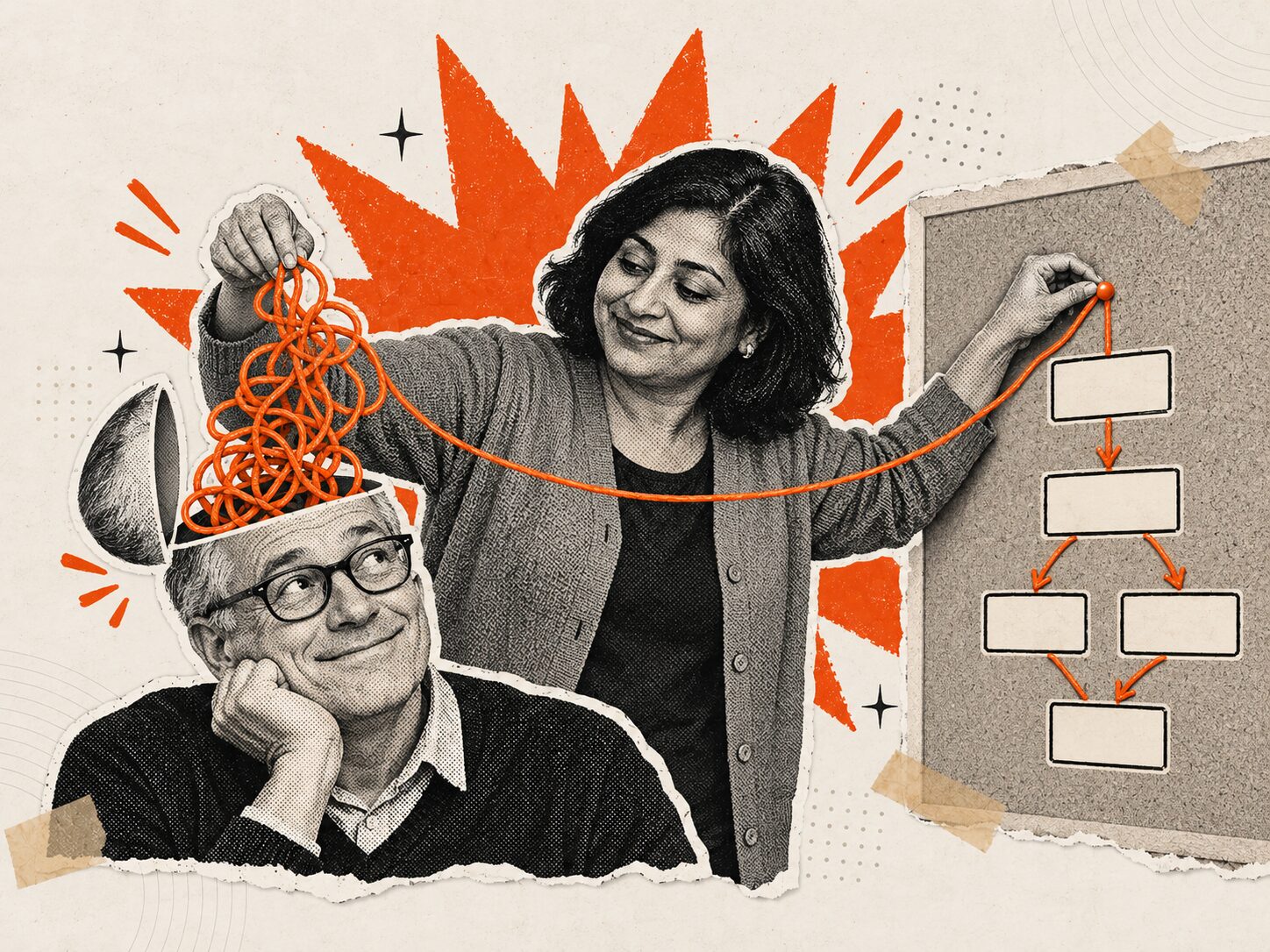
You can’t automate work nobody has written down.
Most small businesses run on habits, shortcuts and a few people who just know. Buying an AI tool on top of that usually adds another login. So we start with the work itself.
- Sarah’s on holiday, so nobody knows how invoicing works.
- Work bounces between inboxes, spreadsheets and too many tools.
- The same details get typed in more than once.
- You know AI could help, but not where to start or what to spend.

Put a number on the hours you’re losing.
Move the sliders to match your team. Use your own best guess.
Capacity you pay for each year
£88,320
1,472 hours a year that could go on clients, sales or growth. Based on 46 working weeks and your own numbers.
The sprint finds where those hours go and what each fix is worth. It starts from £1,950 + VAT$2,500 USD.
More revenue from the team you already have.
Win more of your enquiries
Replies and quotes go out the same day, before the client looks elsewhere.
Take on more clients without hiring
The admin that eats senior time is handled, so capacity goes on paid work.
Bill sooner
Work stops waiting on missing records and handovers, so invoices go out on time.
Spend on AI where it pays back
Every fix ranked by its value, so you invest in the ones that move revenue.
The sprint shows you how to get there, step by step, for your business.
Four steps. A fixed end date.
We book your final walkthrough on day one, so you always know when you will have your plan.
01 · Week 1
Map the work
We talk to you and the people doing the job. We follow real examples and draw how the work actually moves today.
02 · Week 2
Find the fixes
We spot the delays, repeats and handovers. Then we match each one to the simplest fix: a clearer process, a tool you already have, automation or AI.
03 · Week 2–3
Design the better way
We show the new process step by step: who does what, what AI does, and what needs to happen first.
04 · Final week
Walk it through together
We present it live to you and your team, answer questions and agree the next step.
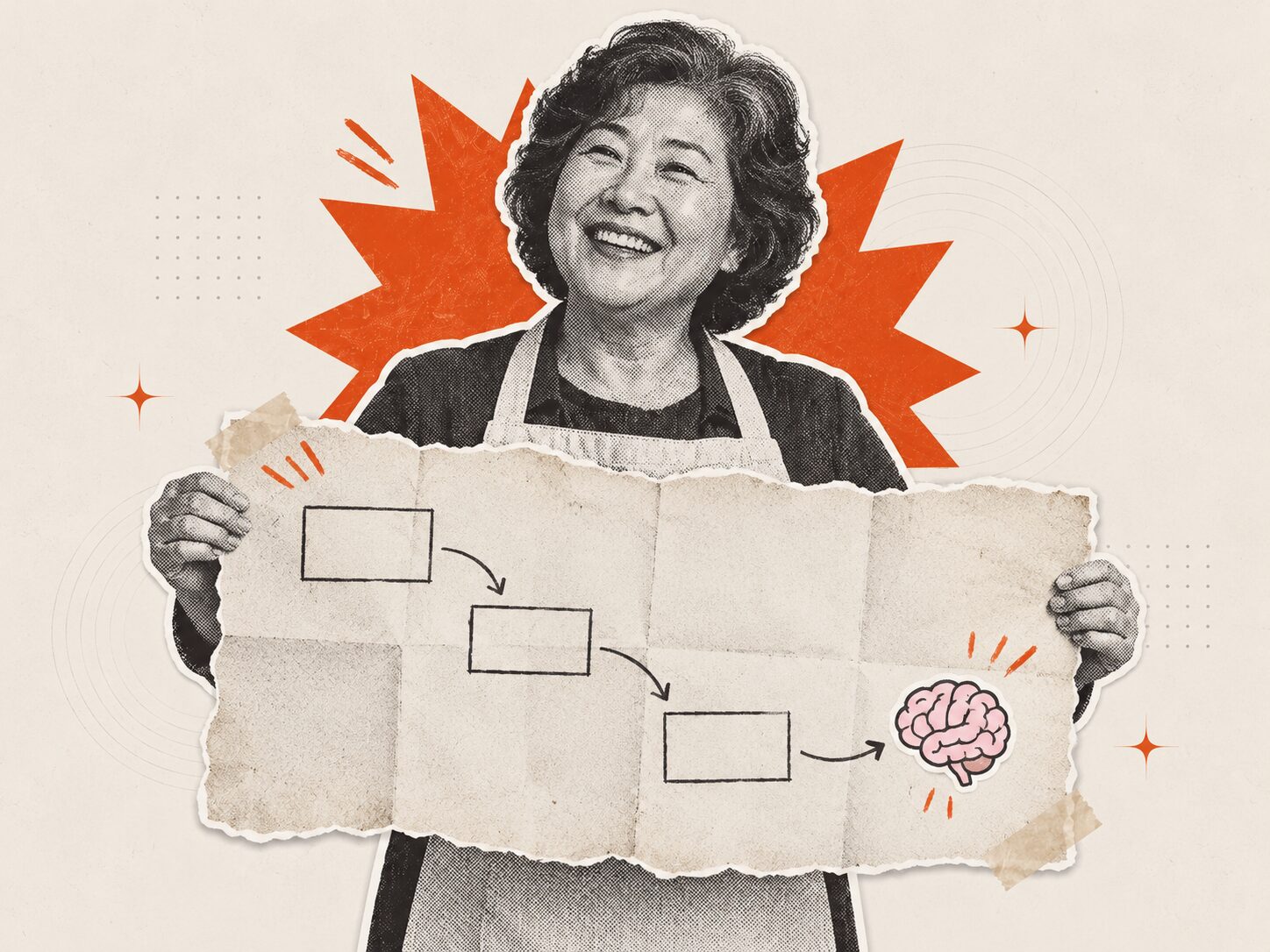
An illustration of the kind of map you get. Your maps show your real jobs, steps and people.
Every business has a few jobs that hold everything up.
Accountancy firms
Chasing records, onboarding and year-end prep. Free up capacity to take on more clients before January.
Law firms
Enquiries, conflict checks and standard documents. Faster intake turns more enquiries into instructions.
Hotels and hospitality
Guest requests, maintenance and shift handovers. Fewer slip-ups mean better reviews and more repeat bookings.
Wellness and events
Bookings, sponsor admin and logistics. Run more events with the same team.
Something else? Most local businesses have the same kind of tangle. Tell us yours on the call.
A plan your team can actually use.
Everything is yours to keep and edit, whether you build it with us, with someone else or yourselves.
- A costed plan: every fix ranked by its value to your business and how quickly it pays back
- Simple maps of how your key jobs work today
- A redesigned process, with clear roles and handovers
- Where AI and automation fit, and where they do not
- A step-by-step plan, in order, with owners
- A plan to help your team adopt the new way of working
- A written report, a live walkthrough and editable files you keep
What the plan looks like on the page.
Each job gets a line: the hours it takes today, the hours after the fix, and the part a person keeps. This sample is for an accountancy practice of 12 people. Your report uses your jobs and your team’s numbers.
| Task | Hours today | After | Stays human |
|---|---|---|---|
| Onboarding a new client | 20 hours a week | 8 hours a week, including review | Checking identity and agreeing the engagement letter |
| Chasing missing records before year end | 6 hours a week | 2 hours a week | Calling the clients who still have not replied |
| Preparing the monthly management pack | 10 hours a month | 4 hours a month, including review | The commentary and advice to the client |
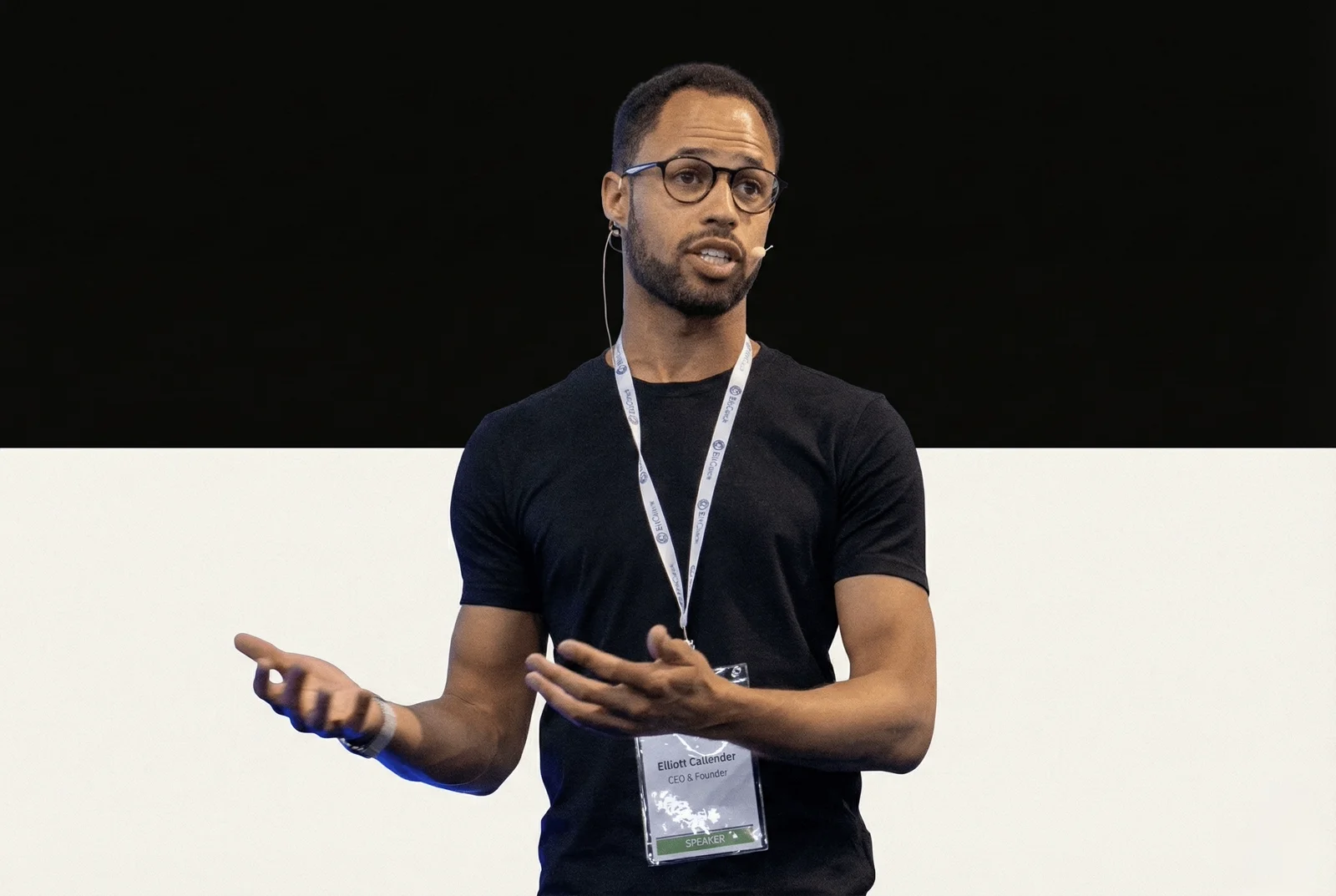
I’m Elliott. I like untangling things.
There has never been a better time to fix how a business works. Jobs that ate a whole afternoon can now take ten minutes. Most owners haven’t seen it yet, and the ones who have usually don’t know where to start.
I started out mapping processes inside banks and insurers, long before AI made it this fun.
That’s the bit I love. Sitting with your team, finding the knot everyone quietly works around, and making the day easier for the people doing the work.
I’m not here to sell you software or keep you hooked on me. We sort the tangle out together, you keep the map, and you’re free to run with it.
Elliott Callender · Founder, Remote Humans
- 18+ years
- making complex technology usable
- 12 years
- business analysis in wealth management
- Head of Remote
- formerly, Economics Design
- 28 leaders
- coached on real AI work
Elliott has worked with








- Friends Life
Owners and leaders we’ve worked with.
Testimonial · 4:16
It's going to save a considerable amount of time. More importantly, it's going to save a considerable amount of money.
Iain Davidson · Health, Safety & Security Leader, Five-Star Luxury Hotels
Testimonial · 7:10
It gave us that mindset shift of there's so many things we can do that are accessible to people like us who are not technical.
Sheena & Jo · Co-Founders, Somnii
Testimonial · 3:13
Get someone like Elliott to work with you through the journey. In a couple of days, boom, you're set up and ready to explore what the future can look like.
Lisa JY Tan · Founder, Economics Design
Is it right for you?
- Owner-led businesses with roughly 5–100 people
- Larger organisations, starting with your highest-value team or department
- A team that feels busy, but not always productive
- Little or no written process, and that is fine
- You want a plan you can act on, not a slide deck
- You want a tool built next week without looking at the work first
- Nobody on your team can spare time to show us how things work
Take the next step your way.
Your plan might start with a clearer process, tidier data, some training or a small build. Run it yourselves, or get our help. Any further work is a separate, optional agreement.
Common questions.
Do we need to be using AI already?
No. We start with how your work runs today and the tools you already have. The sprint shows what needs to be in place first, and training or building comes after.
We have more than 100 people. Can we still do this?
Yes. We start with the team where better processes are worth the most, then use what we learn to plan the next one.
We are a small team. Is this for us?
Yes. The sprint is built for businesses of roughly 5-100 people, and we focus on the few jobs that matter most.
What if nothing is written down?
That is normal. We learn the work from the people who do it and write it down together.
How much of our time does it take?
Not much. You join the kick-off and the final walkthrough, and your team spends short sessions showing us real examples. We agree who and when before we start.
How much does it cost?
From £1,950 + VAT$2,500 USD, as of 20 October 2026. The final fee depends on how many jobs and people are involved. We agree it up front, so there are no surprises.
Do you build an AI tool during the sprint?
No. The sprint gives you the maps, the design and the costed plan, and we may run a small test to answer a specific question. Building is scoped and priced separately.
Do we have to work with you afterwards?
No. You keep everything and can run the plan yourselves, with us or with someone else.
Should we hire someone for AI or use you?
Prove the value with us first, then hire. A senior UK AI hire costs £144,000-£214,000 a year and can take nine months to recruit, so the best part of a year passes before anything ships. For a larger organisation, our AI Design Sprint gives you a costed plan in 2-4 weeks for under £12,000, then we build the first tools with your team and train them as we go, so your eventual hire starts with working systems and a trained team. (Pay: Levels.fyi, October 2026; Robert Half 2027 Salary Guide. Hiring time: AWS research reported by The Banker, May 2026, UK financial services.)
How are you different from a big consultancy?
You work directly with the person doing the work, at a published price. Elliott runs the first call, every session and the handover, and the AI Design Sprint has a fixed fee from £1,950 + VAT$2,500 USD and a fixed end date of 2-4 weeks. You keep everything we build, so your team can run it without us.
What should I ask before hiring an AI consultant?
Ask five things: who will do the work, what it costs, when it ends, what you keep, and whether they can show work like yours. A good consultant answers all five before you book. Our answers: Elliott does the work, our prices are published, the sprint ends in 2-4 weeks, you keep everything, and our client stories name the client and what they built.
For accountancy practices, our guides to accounting workflow automation and chasing client records show how to map a job before choosing tools.
Start with how the work really happens.
Tell us which jobs slow your team down. On a free 30-minute call we will suggest a scope and a fixed fee. No obligation.
Book a free 30-minute call